the last god
The last god is a phrase that emerges from the bleakest theological reckoning in Cormac McCarthy's The Road, spoken by the old man Ely during his brief encounter with the man and the boy. It encapsulates the novel's vision of a world where divinity has not simply vanished but has been reduced to a single, fragile, human embodiment — a child who may or may not be the final repository of the sacred. The concept is not a statement of faith but a desperate, almost nihilistic hypothesis, one that Ely immediately qualifies and the man refuses to endorse, yet which haunts the remainder of the narrative.
Origin and Context: Ely's Prophecy
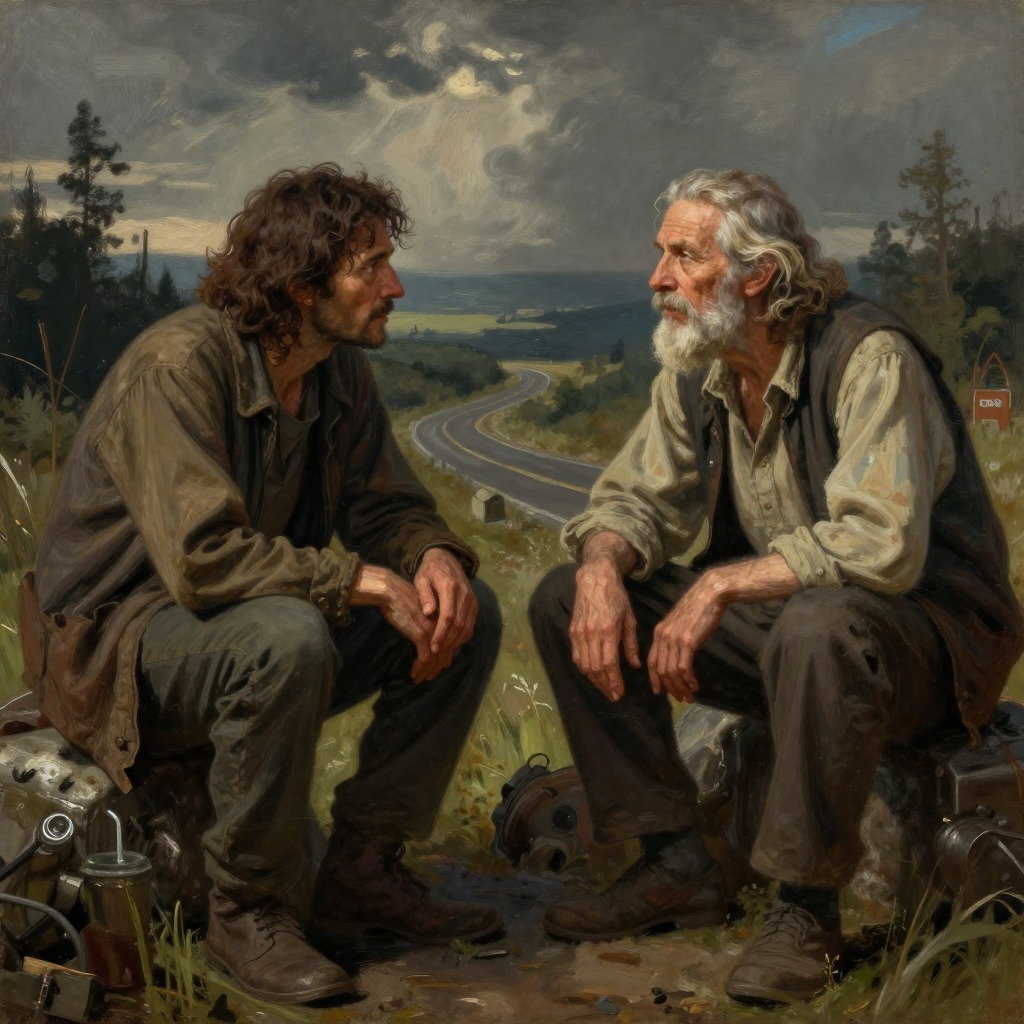
The phrase arises during the campfire conversation between the man, the boy, and Ely, a blind old wanderer who has survived by begging and hiding. When the man asks Ely what he would say if the boy were a god, Ely shakes his head and replies: "I'm past all that now. Have been for years. Where men cant live gods fare no better. You'll see. It's better to be alone. So I hope that's not true what you said because to be on the road with the last god would be a terrible thing so I hope it's not true." This speech is not a confession of belief but a warning: in a world where human life has become unlivable, any remaining divinity is doomed to share that fate. The last god is not a source of salvation but a burden, a fragile presence that cannot protect itself and whose existence only magnifies the horror of its inevitable extinction.
Theological Implications: The Death of God and the Survival of the Sacred
Ely's words echo the novel's broader theological landscape, in which the man himself has questioned God's existence with bitter fury — "Are you there? ... Have you a neck by which to throttle you? Have you a heart? Damn you eternally have you a soul?" — and has concluded that "there is no God and we are his prophets." The last god, then, is not a transcendent deity but an immanent, human-scale presence that survives only as long as the child survives. The phrase implies that the sacred has been stripped of its power and reduced to a single, vulnerable point of light in a universe of darkness. Ely's refusal to name himself, his insistence on anonymity, mirrors this theological evacuation: if the last god is nameless, it cannot be invoked, worshipped, or even properly acknowledged — only carried, like the fire the boy speaks of, as a silent, almost secret responsibility.
The Boy as the Last God: Evidence and Ambiguity
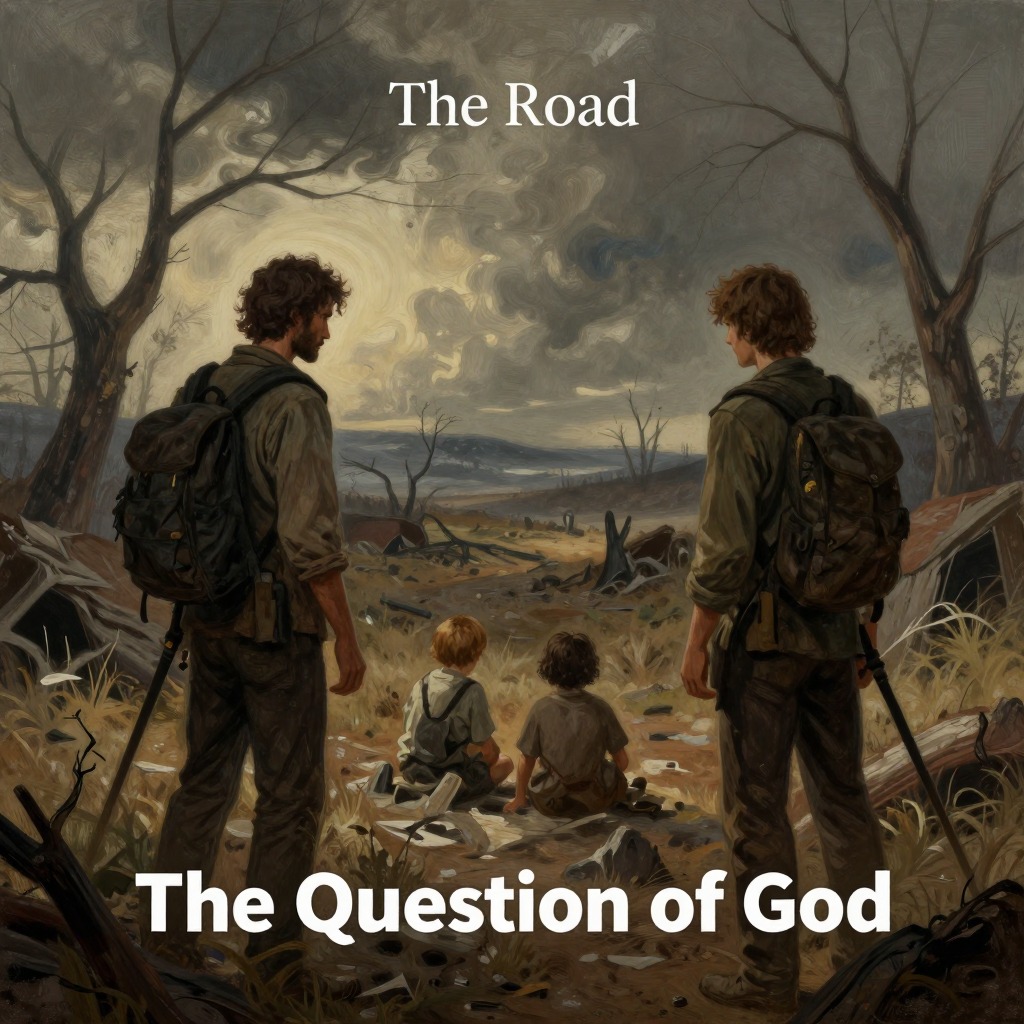
The narrative never confirms whether the boy is literally divine, but it repeatedly presents him as a figure of extraordinary moral clarity and compassion, one who insists on helping the helpless even when survival dictates otherwise. When the man strips the thief naked and leaves him to die, the boy sobs and begs his father to go back, saying "He's so scared, Papa." When the man threatens to kill the thief, the boy cries out, "Papa please dont kill the man." This relentless ethical demand — to see the humanity in even the most desperate enemy — aligns the boy with the role of a moral beacon, a living conscience in a world that has lost all moral coordinates. Yet the novel never resolves the ambiguity: the boy is not a miracle worker, he cannot heal the dying or restore the dead, and his own survival depends on the kindness of strangers. The last god, if he is one, is a god without power, a god who can only suffer and witness.
Consequences and Aftermath: The Last God's Fate
After the man's death, the boy is found by a family who claim to be "carrying the fire" — the same phrase the man and boy used to describe their moral mission. The woman who takes him in tells him that "the breath of God was his breath yet though it pass from man to man through all of time." This suggests that the last god is not a single individual but a transmission, a spark that can be passed from one bearer to another. The boy's survival, his adoption into a new community of good people, implies that the last god may not be extinguished after all — that the fire, the moral core, can be handed on. Yet the novel's final image, of brook trout in mountain streams "maps of the world in its becoming" that "could not be put back," undercuts any easy redemption. The last god may survive, but the world that could sustain him is gone forever.